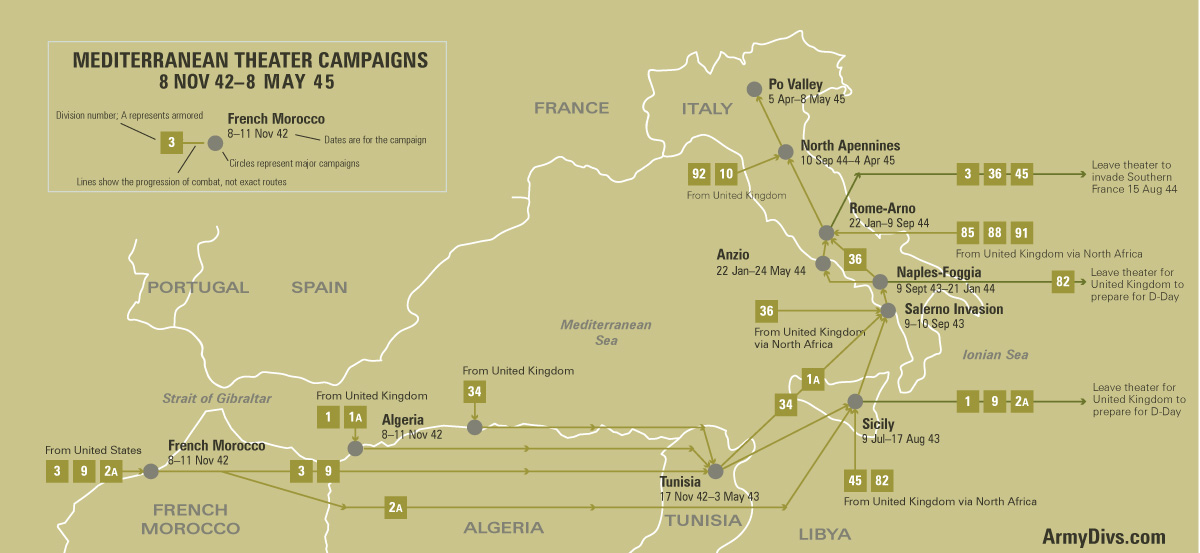
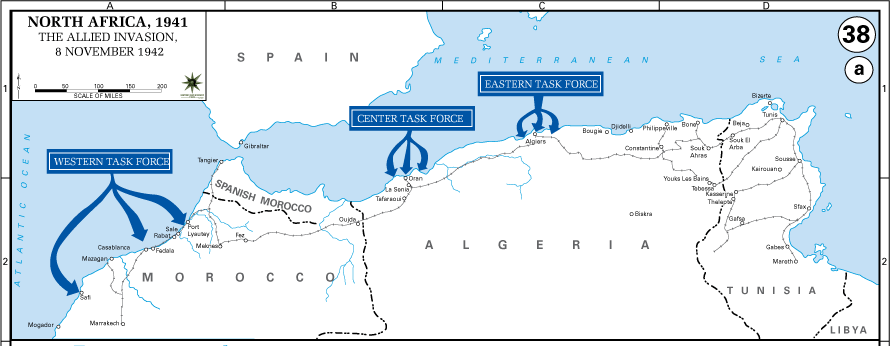
Operation TORCH opened on 8 November 1942, when Allied forces launched three nearly simultaneous amphibious assaults against French North Africa. General Dwight D. Eisenhower commanded the operation through Allied Force Headquarters, while three task forces struck at Casablanca, Oran, and Algiers. The all-American Western Task Force under Major General George S. Patton landed on the Atlantic coast of French Morocco. The Center Task Force under Major General Lloyd R. Fredendall attacked the Oran sector. At Algiers, the Eastern Task Force was British-led overall, but Major General Charles W. Ryder commanded the American ground contingent in the assault force.
The landings met uneven resistance from Vichy French forces. Around Casablanca, French shore batteries and warships opposed the invasion, and naval fighting developed off the harbor while American forces came ashore at Safi, Fedala, and Mehdia before converging on the city. At Oran, resistance proved stiffer than Allied planners had hoped. American troops landed east and west of the port, and attempts to force an early entry into the harbor failed under French fire. The city did not surrender until noon on 10 November. At Algiers, by contrast, the assault moved more quickly. Resistance was limited in most sectors, and negotiations with French authorities in the city accelerated the collapse of organized opposition there by the evening of 8 November and the morning of 9 November.
By 11 November, organized resistance in Morocco and Algeria had ceased, and French North Africa had passed into Allied hands. The campaign gave the Allies secure lodgments on the western end of the North African coast, opened the way for the subsequent drive into Tunisia, and formed the western half of the great converging movement that, together with Eighth Army’s advance from Egypt, would ultimately trap and destroy Axis forces in North Africa.
Courtesy of the U.S. Military Academy, The West Point Atlas for The Second World War Europe and the Mediterranean
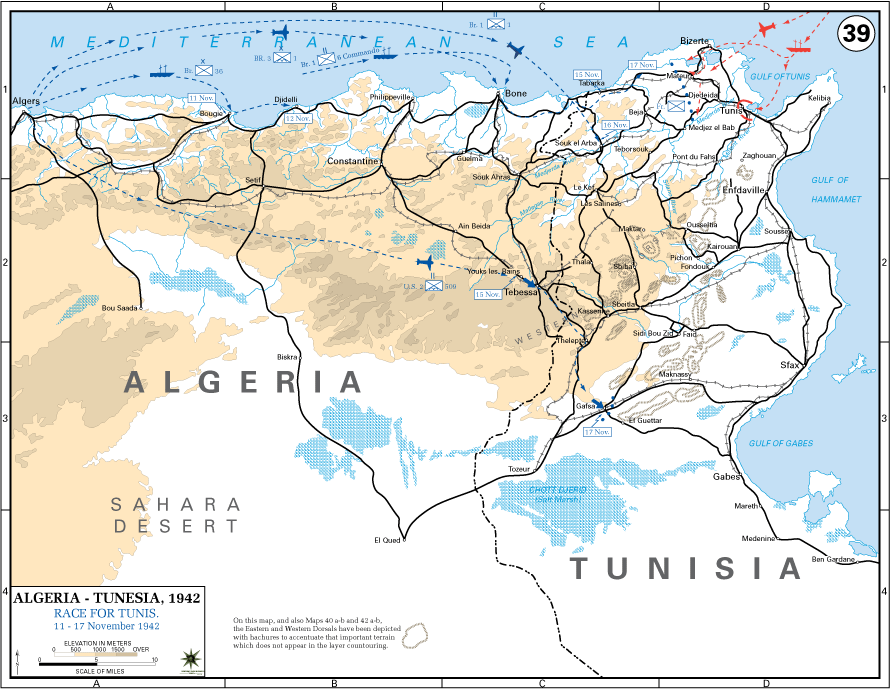
The Allied victory in Algeria and French Morocco left the Axis holding Tunisia, where German airlifts rapidly poured reinforcements into the Tunis-Bizerte bridgehead. British First Army under General Kenneth Anderson raced east from Algeria, but early assaults in November and December 1942 were thrown back with heavy losses. By winter the Germans had massed more than 100,000 troops in the bridgehead, supported by air power based in Sicily that gave the Axis control of the skies over the front.
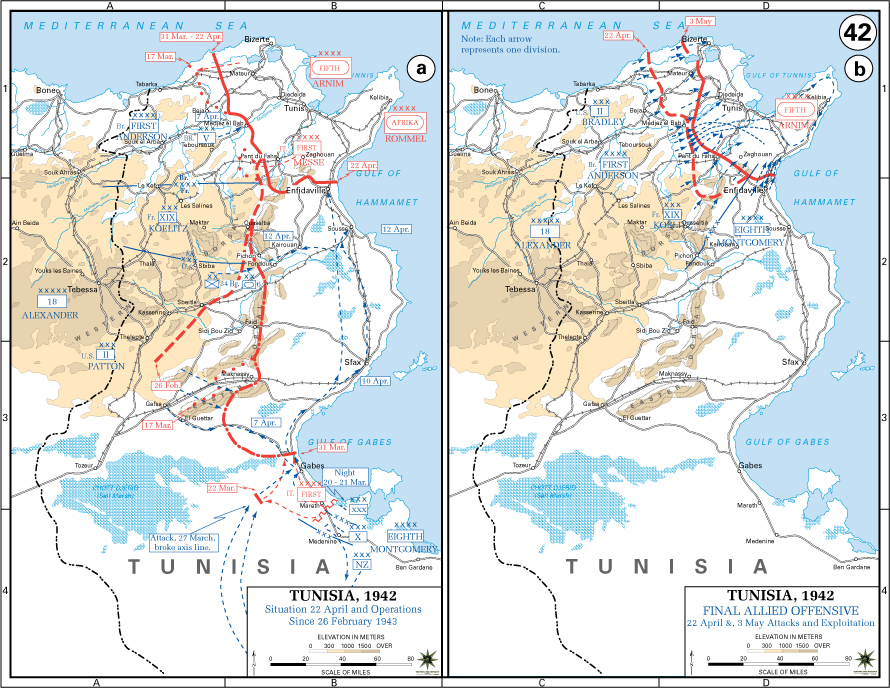
In February 1943 Rommel's panzers struck the inexperienced U.S. II Corps, routing its armored units at Sidi Bou Zid and breaking through Kasserine Pass on February 19. Only an enemy shift of priorities prevented a deeper penetration into Algeria. General Dwight D. Eisenhower overhauled the Allied command, placing General George S. Patton at the head of II Corps. Under a new 18th Army Group commanded by British General Harold Alexander, the Allies coordinated pressure across a front hundreds of miles long. In March Patton drove east to El Guettar, where the 1st Infantry Division repelled the 10th Panzer Division in one of the first clear American tactical victories of the war.
A coordinated Allied offensive in late April and early May 1943 broke through the Axis perimeter from north to south. The 1st Armored and 9th Infantry Divisions enveloped Bizerte as British forces entered Tunis on May 7. Cut off from any hope of evacuation, Axis units collapsed. German General Juergen von Arnim surrendered on May 12, and the campaign ended on May 13, 1943. The Allies took 275,000 prisoners, eliminating two full Axis armies and completing the liberation of North Africa.
Courtesy of the U.S. Military Academy, The West Point Atlas for The Second World War Europe and the Mediterranean
Courtesy of the U.S. Military Academy, The West Point Atlas for The Second World War Europe and the Mediterranean
 1st Infantry Division
 2nd Armored Division
 3rd Infantry Division
 9th Infantry Division
 45th Infantry Division
 82nd Airborne Division
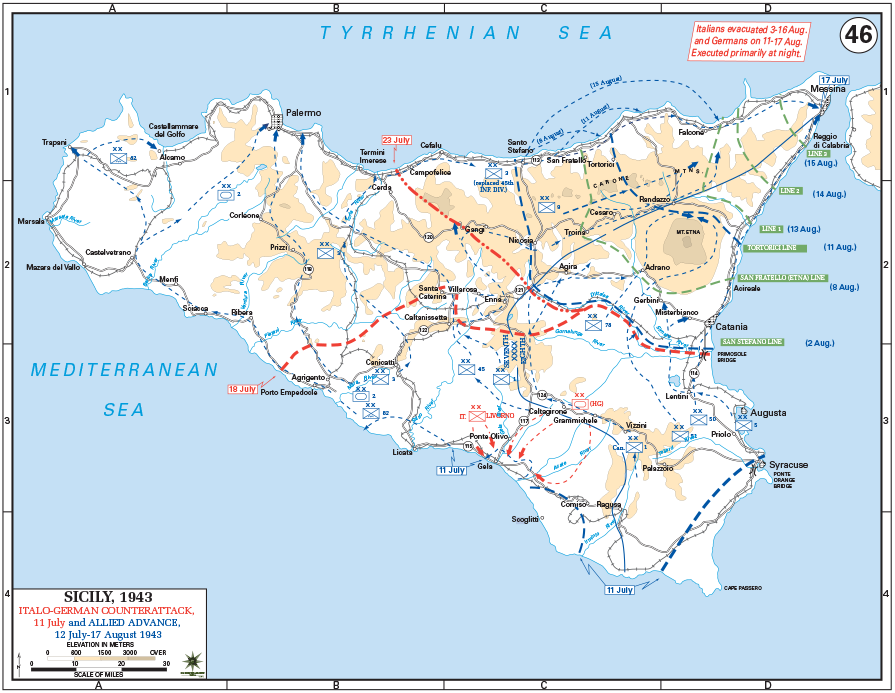
Operation Husky opened on July 10, 1943, with the largest amphibious assault the world had yet seen. More than 160,000 Allied troops under General Harold Alexander landed on the southeastern coast of Sicily. General George S. Patton's U.S. Seventh Army came ashore in the Gulf of Gela, while General Bernard Montgomery's British Eighth Army landed along the Gulf of Noto to the east. A gale the night before scattered the 82nd Airborne Division's paratroopers widely, but the men went to work wherever chance deposited them, cutting communications and tying down Axis reserves throughout the interior.
Axis mobile forces struck back on July 11. The Hermann Goering Panzer Division drove to within two thousand yards of the American beaches at Gela before naval gunfire and ground fire turned the attack. Patton secured his beachhead and swept westward, entering Palermo on July 22. In the northeast, Montgomery's advance up the east coast bogged down against German paratroopers in the foothills of Mount Etna. American forces were shifted to the northern coastal highway and fought a grueling series of battles—at Troina, Santo Stefano, and Brolo—as both armies converged on Messina.
The Germans and Italians executed a masterful evacuation across the Strait of Messina, withdrawing over 100,000 troops and substantial equipment to the mainland in just over a week. American forces entered Messina on August 17, 1943, to find the Axis garrison gone. The 38-day campaign removed Sicily from Axis control, provided the Allies a base for the invasion of the Italian mainland, and hastened the fall of Mussolini, who was deposed on July 25 as his armies crumbled on his own soil.
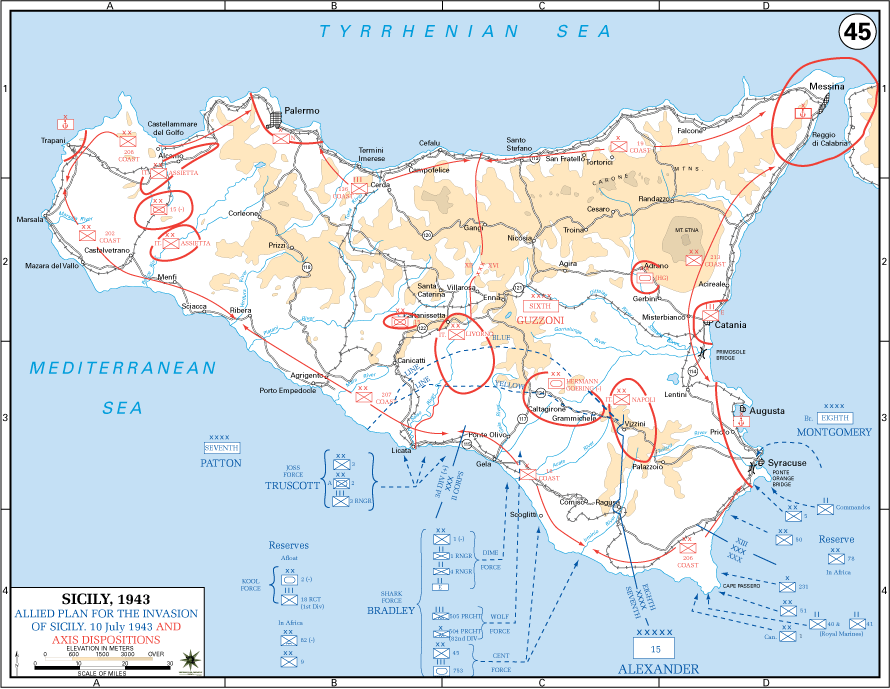
Courtesy of the U.S. Military Academy, The West Point Atlas for The Second World War Europe and the Mediterranean
Courtesy of the U.S. Military Academy, The West Point Atlas for The Second World War Europe and the Mediterranean
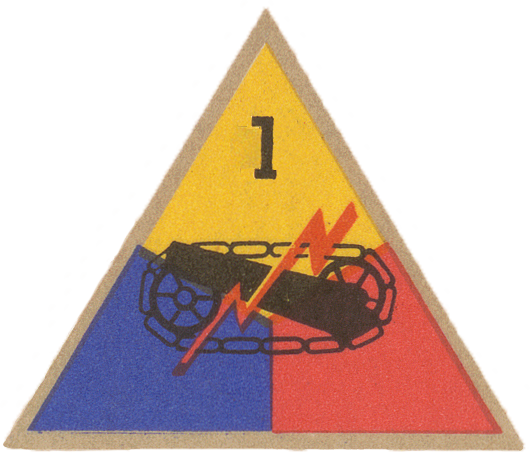 1st Armored Division1st Infantry Division3rd Infantry Division
 34th Infantry Division
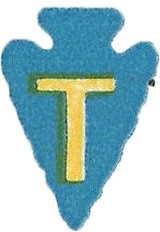 36th Infantry Division45th Infantry Division82nd Airborne Division
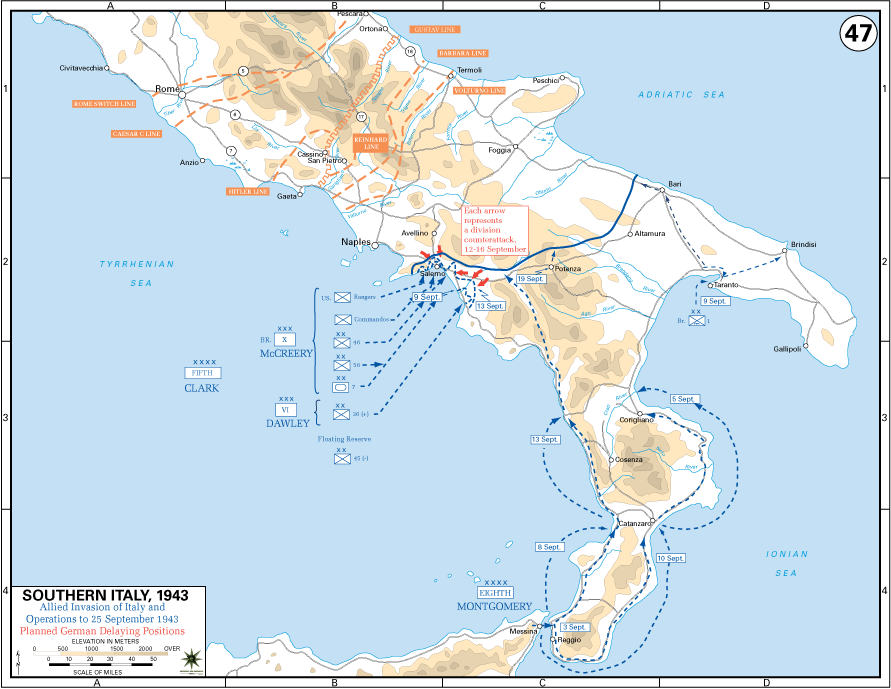
Operation Avalanche opened on September 9, 1943, when General Mark Clark's Fifth Army landed at Salerno, on the coast south of Naples. The 36th Infantry Division led the American assault, coming ashore without preliminary bombardment in hopes of surprise. German units reacted swiftly. By midday the 16th Panzer Division had launched the first of many counterattacks, and over the next four days the beachhead grew shallower and more precarious. On September 13 Field Marshal Albert Kesselring committed four divisions in his strongest counterattack, driving a wedge between the British and American sectors and pushing armor to within a mile of the Sele River before combined artillery and naval gunfire halted the advance.
General Clark held firm, and Montgomery's Eighth Army, advancing north from Calabria, linked up with Fifth Army on September 16. Allied forces pushed north, and Naples—the first major European city liberated by the western Allies—fell on October 1. On the same day, Eighth Army forces seized the Foggia airfield complex on the Adriatic plain, giving Allied strategic bombers vital bases within range of southern Germany, the Balkans, and the Romanian oil fields at Ploesti.
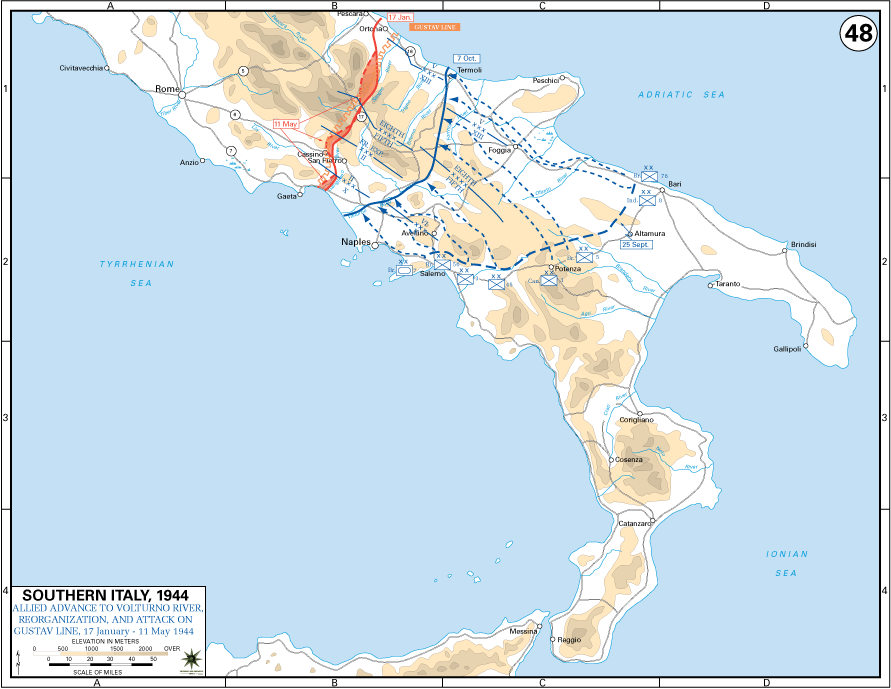
The advance north of Naples crossed the Volturno River in October and continued against a German withdrawal through a series of prepared defensive belts. Rain and cold turned the mountain roads to mud and swelled every river. Kesselring settled his forces into the Gustav Line—anchored on Monte Cassino and the heights above the Liri valley—and the Italian campaign slowed to a brutal war of ridges and ravines. By January 1944 both Fifth and Eighth Armies had fought to a standstill before that line.
Courtesy of the U.S. Military Academy, The West Point Atlas for The Second World War Europe and the Mediterranean
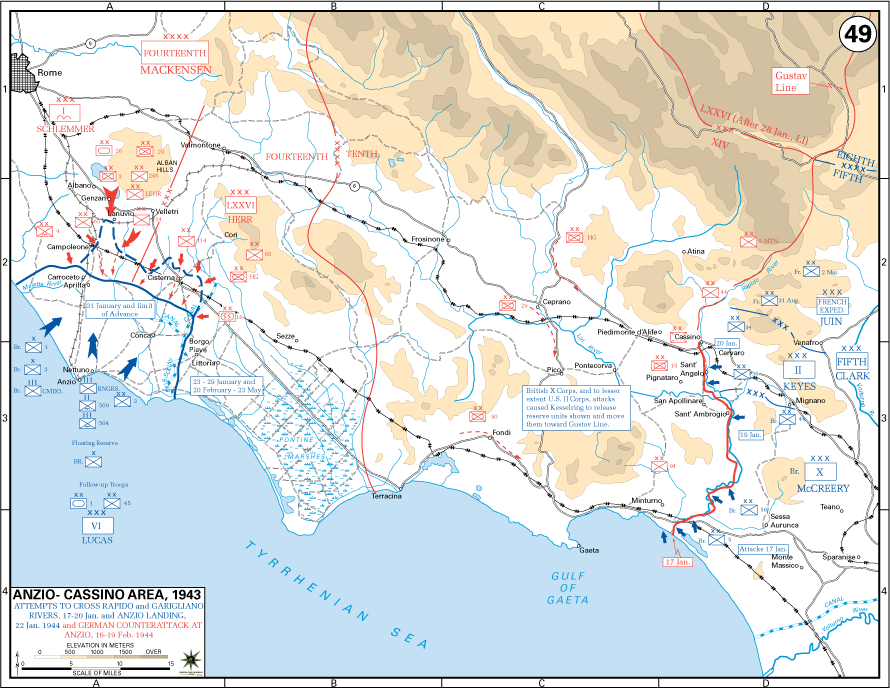
To break the Gustav Line deadlock, Allied planners launched Operation Shingle before dawn on January 22, 1944. VI Corps under Major General John P. Lucas put two divisions ashore at Anzio and Nettuno, thirty miles south of Rome. The landing achieved complete surprise. German reserves had been drawn south by Allied attacks on the Garigliano and Rapido Rivers, leaving a single company to defend the Anzio beaches. The first waves came ashore unopposed, and by midnight over 36,000 men and 3,200 vehicles were ashore with fewer than 200 casualties.
Lucas consolidated the beachhead rather than driving immediately to the Alban Hills, giving the Germans time to react. Adolf Hitler, calling the Allied lodgment the "Anzio abscess," rushed reinforcements from across Europe. In mid-February German General Eberhard von Mackensen launched two major counterattacks that drove to within a mile of the sea before Allied artillery and air power halted them. Major General Lucian K. Truscott replaced Lucas on February 23. For the next three months the two sides fought a grinding war of attrition in the narrow coastal plain, with the beachhead under near-constant artillery fire and German forces pressing on every side.
The deadlock broke in late May when Allied forces cracked the Gustav Line in the south and the Liri valley drive began. Truscott's VI Corps launched Operation Buffalo on May 23, punching out of the beachhead toward Cisterna and beyond. General Clark elected to drive toward Rome rather than cutting northeast to Valmontone to trap the retreating German armies—a decision that allowed many German divisions to escape northward. Nevertheless, VI Corps linked with Fifth Army forces on May 25, ending the four-month isolation of the beachhead and opening the road to Rome.
Courtesy of the U.S. Military Academy, The West Point Atlas for The Second World War Europe and the Mediterranean
Courtesy of the U.S. Military Academy, The West Point Atlas for The Second World War Europe and the Mediterranean
1st Armored Division3rd Infantry Division34th Infantry Division36th Infantry Division45th Infantry Division82nd Airborne Division 85th Infantry Division
 88th Infantry Division
 91st Infantry Division
Rome fell on June 4, 1944, when Allied forces entered the city—the first Axis capital to fall to the western Allies. The liberation capped a weeks-long drive that finally cracked the Gustav Line. In mid-May a coordinated assault along the entire Fifth Army front—led by the French Expeditionary Corps crossing the Aurunci Mountains and the U.S. II Corps pressing at Cassino—forced the Germans into a broad withdrawal. The Anzio beachhead broke out simultaneously, and converging Allied columns pressed north toward the capital. German resistance collapsed faster than anticipated, and Clark's forces entered Rome on June 5.
The fall of Rome was immediately overshadowed by the Normandy landings of June 6, which shifted Allied attention and resources to France. General Alexander ordered the two Allied armies to pursue the retreating German Tenth and Fourteenth Armies north toward a Pisa-Rimini line with all speed. Progress was steady but slower than planned. Civitavecchia, Viterbo, and Orvieto fell in quick succession. The Eighth Army drove toward Florence and the Adriatic coast, while Fifth Army pushed up the Tyrrhenian side of the peninsula.
Momentum slowed in late July as the Germans stiffened their resistance and seven veteran Allied divisions were transferred to Operation Dragoon, the invasion of southern France. By early August Allied forces had reached the Arno River along most of the front. Florence fell on August 11, 1944, and the Arno marked the new front line as the Germans moved north to man their next prepared position—the Gothic Line—in the Apennines above.
1st Armored Division3rd Infantry Division 10th Mountain Division34th Infantry Division85th Infantry Division88th Infantry Division91st Infantry Division
 92nd Infantry Division
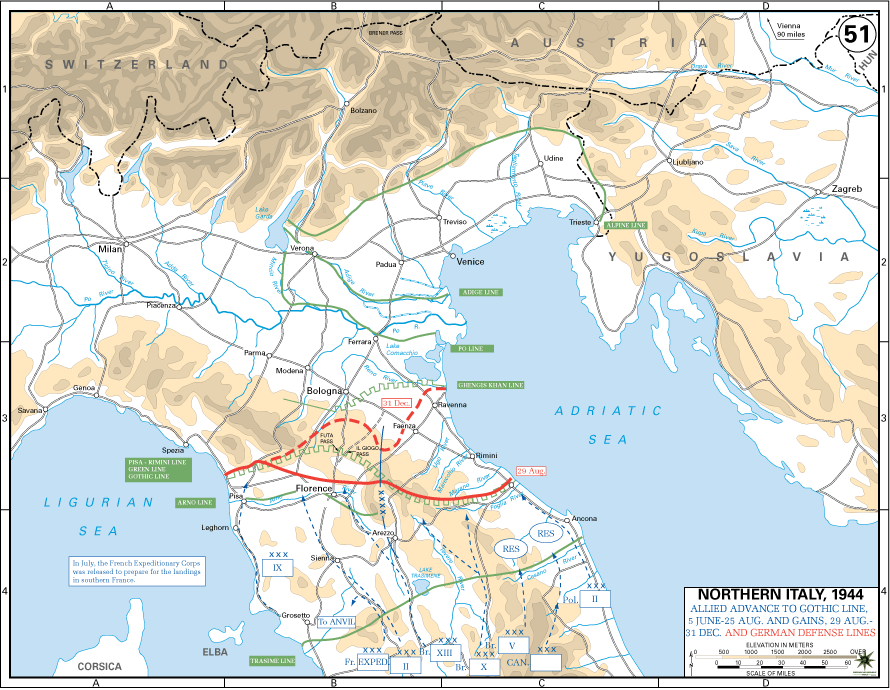
With Allied armies along the Arno River in late summer 1944, General Harold Alexander launched a major offensive to breach the Gothic Line before winter could set in. The British Eighth Army struck first, attacking near the Adriatic coast on August 25 and penetrating the Gothic Line defenses near Pesaro on August 30. General Mark Clark's Fifth Army followed on September 10, attacking north from Florence toward Bologna along the main highway corridors through the northern Apennines. Early gains were promising, and for a few weeks it appeared the Allies might reach the Po Valley before the autumn rains arrived.
The Germans yielded ground slowly and skillfully, falling back from one mountain crest to the next. By October the offensive had lost momentum. The northern Apennines—their deep valleys, exposed ridgelines, and narrow mountain roads—gave every advantage to the defense. Autumn rains arrived early, turning tracks to mud and grounding Allied air support. Both armies were also understrength, having sent divisions to France. II Corps brought Allied forces within sight of Bologna in November, but the Germans held the heights above the city and the campaign entered a winter stalemate. In the coldest months, men on both sides endured brutal conditions in the mountains, fighting for individual ridgelines and peaks that offered little strategic gain.
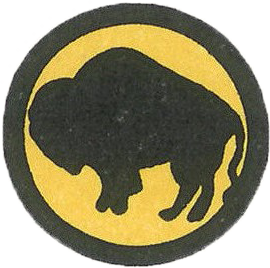
The 10th Mountain Division arrived in January 1945 and trained for operations in the high terrain. The 92nd Infantry Division—the Army's only all-Black division in the European theater—held a long coastal sector on the Ligurian front. Brazilian and South African formations filled sections of the line. Limited operations continued through the winter months, but no breakthrough materialized. The North Apennines campaign formally ended on April 4, 1945, as conditions and preparations for the final offensive shifted focus to the Po Valley below.
Courtesy of the U.S. Military Academy, The West Point Atlas for The Second World War Europe and the Mediterranean
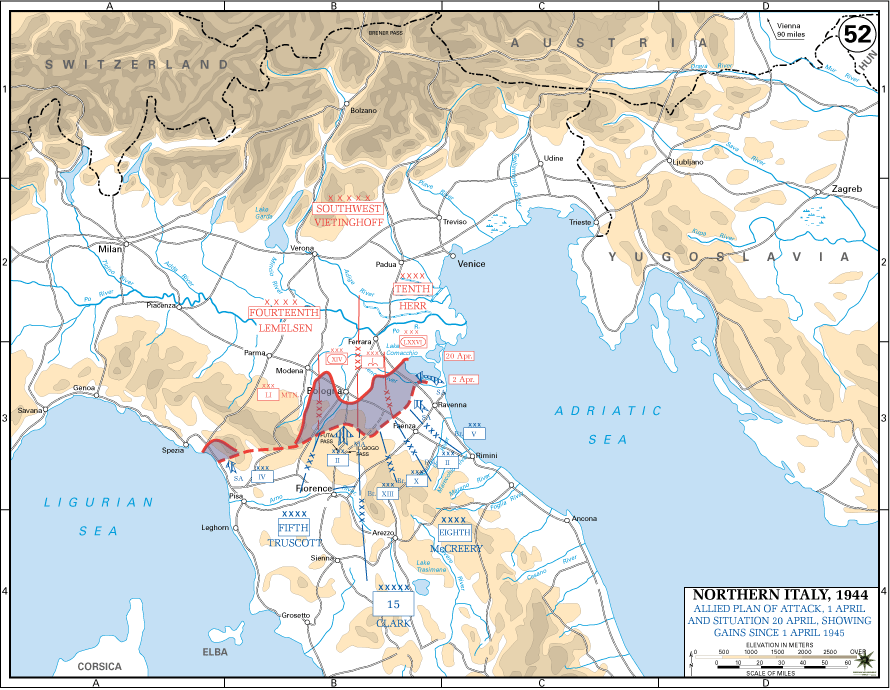
1st Armored Division10th Mountain Division34th Infantry Division85th Infantry Division88th Infantry Division91st Infantry Division92nd Infantry DivisionThe final Allied offensive in Italy opened on April 5, 1945, when the 92nd Infantry Division launched a diversionary attack along the Ligurian coast. The main effort, Operation Craftsman, began on April 14 when General Lucian K. Truscott's Fifth Army struck west of Bologna. On the left, IV Corps—spearheaded by the 10th Mountain Division—drove through the Apennine foothills into the Po Valley below. II Corps, led by the 85th, 88th, 91st, and 34th Infantry Divisions, attacked along the Highway 65 corridor toward Bologna. A massive preliminary air bombardment had shattered German communications and unit cohesion, and the defense collapsed faster than Allied planners anticipated.
Bologna fell on April 21, 1945, as II Corps converged on the city from two sides. Allied columns raced north toward the Po River, encircling and destroying German formations before they could withdraw across. The 10th Mountain Division crossed the Po on April 23 under fire, and other units followed quickly. Verona fell on April 26. The 1st Armored Division sealed escape routes into Switzerland and Austria along the Po Valley's northern rim. The 34th Infantry Division swept west through Parma and Piacenza, gathering thousands of prisoners. On the Ligurian coast, lead elements of the 92nd Division entered Genoa on April 27 to find the city already in the hands of Italian partisans.
On April 29, Axis emissaries at 15th Army Group headquarters in Caserta signed documents for the unconditional surrender of all German forces south of the Alps. A cease-fire took effect at noon on May 2, 1945—three days before Germany's final surrender in western Europe. The 19-month Italian campaign had consumed more Allied lives and resources than any other operation outside of northern Europe, but it had tied down a full German army group, eliminated Italy as an Axis partner, and secured the southern flank of the Allied advance into the heart of the Reich.
Courtesy of the U.S. Military Academy, The West Point Atlas for The Second World War Europe and the Mediterranean